The short answer
A breaker trips to protect your wiring. Most of the time it is too much on one circuit (an overload), and moving a few things to another outlet fixes it. If it trips again right away, with nothing plugged in, or you smell burning or see scorch marks, stop resetting it and call an electrician.
The three reasons a breaker trips
1. Overload. Too many things are drawing power from one circuit at once: a space heater, a microwave and a toaster on the same kitchen line, for example. The breaker heats up and shuts the circuit off before the wire does. This is the most common cause, and it is the safest one.
2. Short circuit. A hot wire touches a neutral or another hot wire, usually from a damaged cord, a loose connection or a failed device. The breaker trips instantly, often with a pop. A breaker that trips the moment you flip it back on points to a short.
3. Ground fault. Electricity finds a path to ground, often through moisture. This is why bathroom, kitchen, garage and outdoor circuits trip in wet weather or after a storm.
What you can safely check
- Note what was running when it tripped. If it only happens with one appliance, that appliance is the first suspect.
- Unplug everything on that circuit, reset the breaker, then plug things back in one at a time.
- Move high-draw items (heaters, hair dryers, window air conditioners) to different circuits, and do not run them off the same power strip.
- Look at the plug and cord of the appliance for heat damage, discoloration or a loose fit.
- Press the TEST and RESET buttons on any GFCI outlet nearby. A tripped GFCI often cuts power to outlets that look unrelated.
Signs to stop and call someone
- The breaker trips again immediately after you reset it with everything unplugged.
- A breaker, outlet or the panel is hot to the touch, buzzing, or smells burnt.
- You see scorch marks, melted plastic or sparking.
- The breaker will not stay reset, or feels loose or soft.
- Lights flicker or dim when large appliances start.
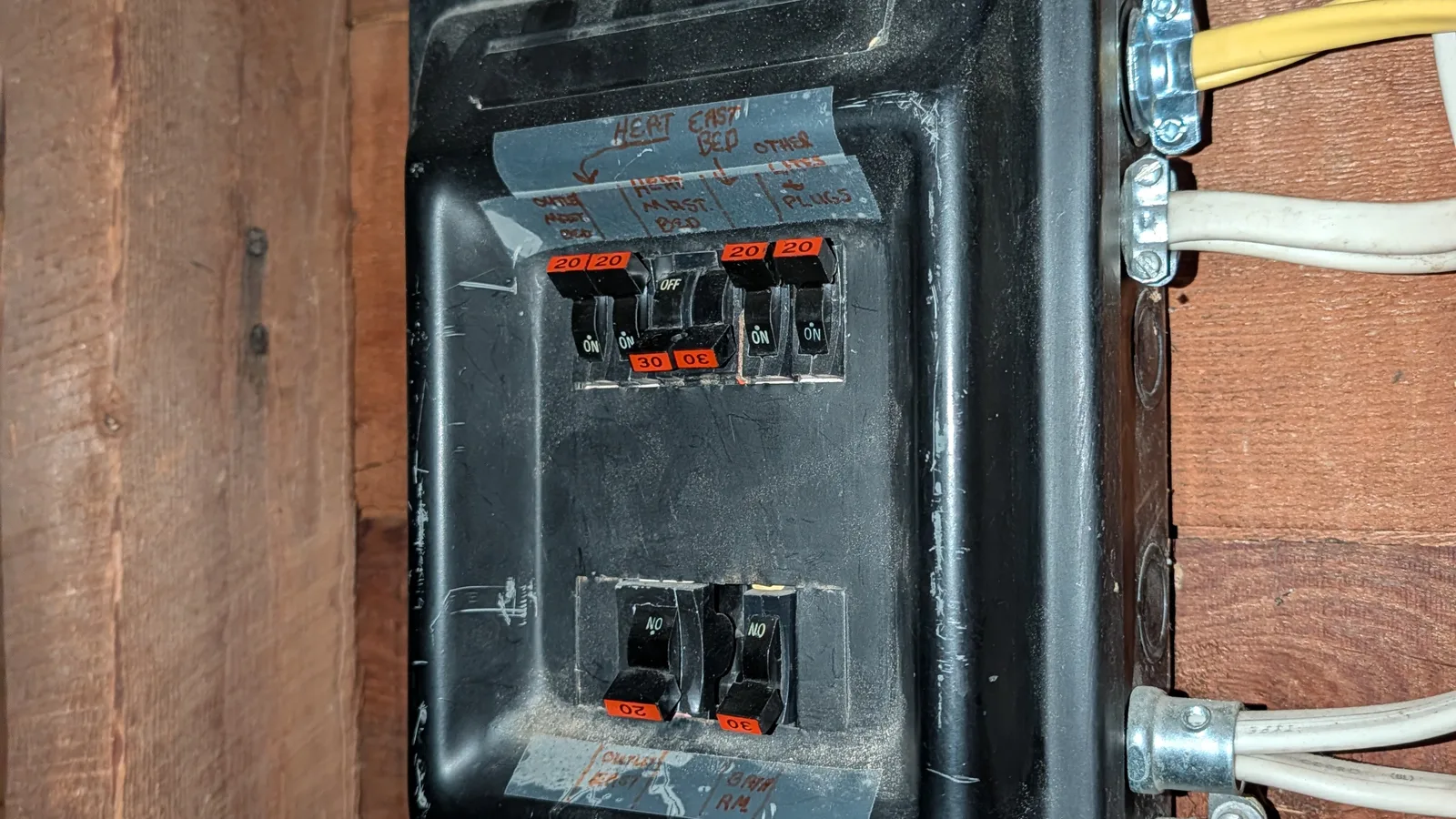
- The panel is old, and you do not know the brand. Some older panel brands have known breaker problems, so it is worth having it looked at.
Do not keep resetting a breaker that keeps tripping, and never tape or hold a breaker on. The breaker is the part doing its job.
Why this matters more in a North Idaho winter
Cold months mean space heaters, heat tape, block heaters and holiday loads, all on circuits that were sized for lighter use. If a breaker starts tripping when the cold snap hits, treat it as a sign that circuit is carrying more than it was built for, and spread the load or have it evaluated.
What to do next
If it is a one-time trip from an overloaded circuit, move the load and keep an eye on it. If it keeps happening, or any of the warning signs above sound familiar, have it checked by a licensed electrician. Simply Young coordinates vetted, licensed electricians, so you get one clear point of contact and a written scope before any work starts.